Your Client Said 'Make It Pretty.' Here's What They Actually Meant. Introducing ZapFolder's Client Intent Resolver
Clients speak in feelings. Your team works in specifics. That gap costs hours every week. ZapFolder's Client Intent Resolver turns raw, messy client feedback into structured change requests, grouped priorities, and targeted clarification questions - so your team can skip the decoding and get straight to the work.
Every creative professional has received feedback like this:
"It's almost there — just needs more energy."
"Can we make it feel more premium?"
"I think the colours are off."
These sentences aren't wrong, exactly. The client knows what they feel. They just don't have the vocabulary to describe what needs to change. And now it's on your team to reverse-engineer that feeling into a concrete revision list, usually under deadline.
This translation problem is one of the most persistent sources of rework in creative and agency work. ZapFolder's Client Intent Resolver is built to solve it.
Where Feedback Goes Wrong
The problem isn't that clients give bad feedback. It's that feedback arrives in a format that's fundamentally incompatible with a production workflow.
A designer needs to know which element to change and how. A client describes a feeling. Between those two things sits a gap and filling that gap manually for every project every time is expensive.
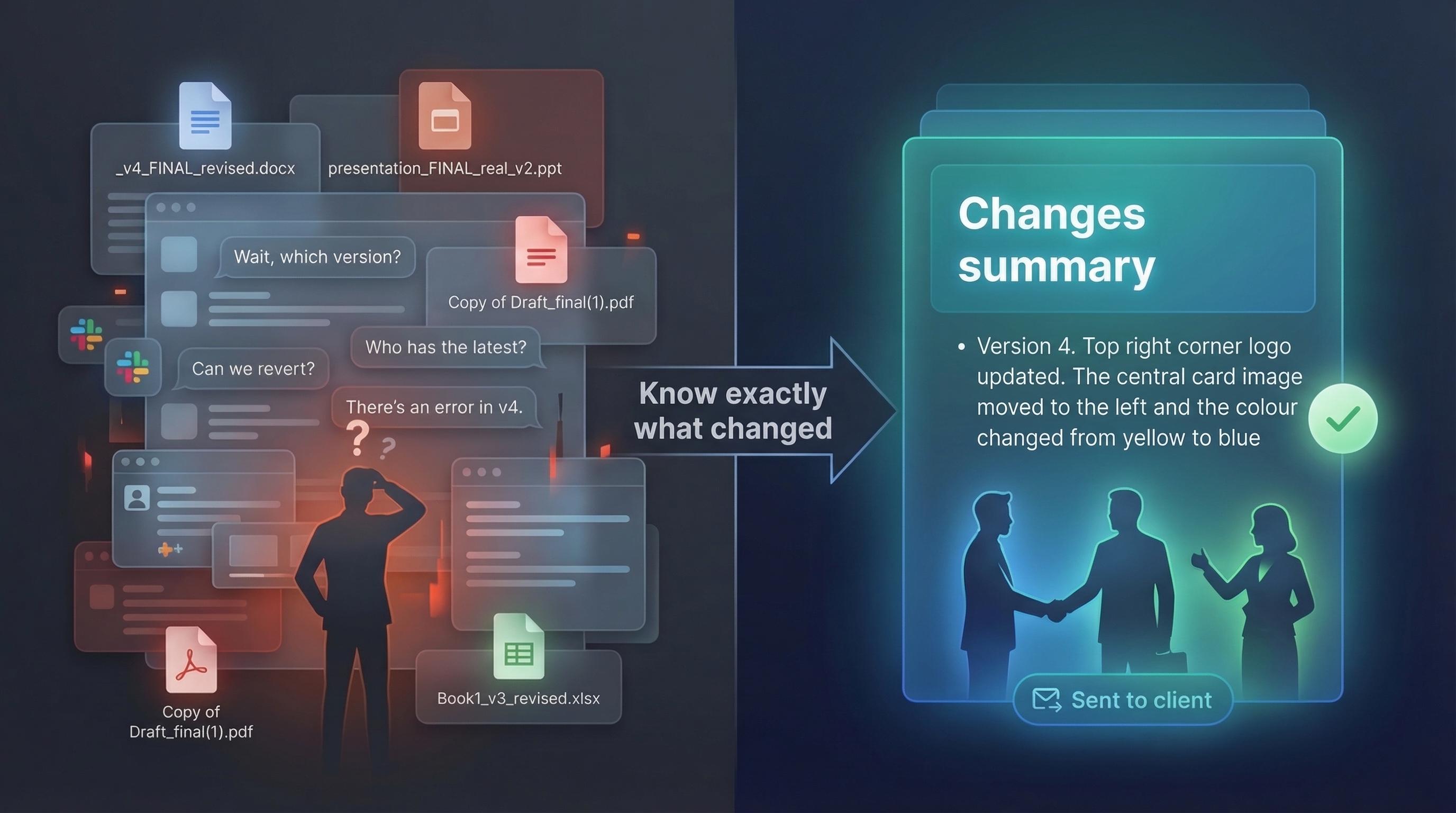
It gets more complex when feedback comes from multiple people. Stakeholders contradict each other. Priorities aren't stated. One comment refers to v2, another to v3. Someone flags an issue that was already fixed. Untangling all of this and turning it into an actionable list is a job that shouldn't require a senior person’s attention.
What the Client Intent Resolver Does
The Client Intent Resolver reads raw feedback, such as comments inside ZapFolder, pasted email text, call notes, transcript extracts. Then it converts it into structured, actionable output.
When something isn't clear enough to act on it generates targeted follow-up questions to get the specifics it needs so your team isn't left interpreting vague feedback on their own.
Specifically, it produces:
- Structured change requests — each piece of feedback broken down into a clear, actionable item tied to a specific file or version
- Grouped priorities — common threads surfaced so your team can see the pattern, not just the pile
- Clarification questions — for feedback that's too vague or contradictory to act on
- Optional client-ready summaries — a polished restatement of what you understood, ready to send back for confirmation before work begins
The output isn't a decision. It's a structured draft that your team reviews, edits, and acts on.
A concrete example
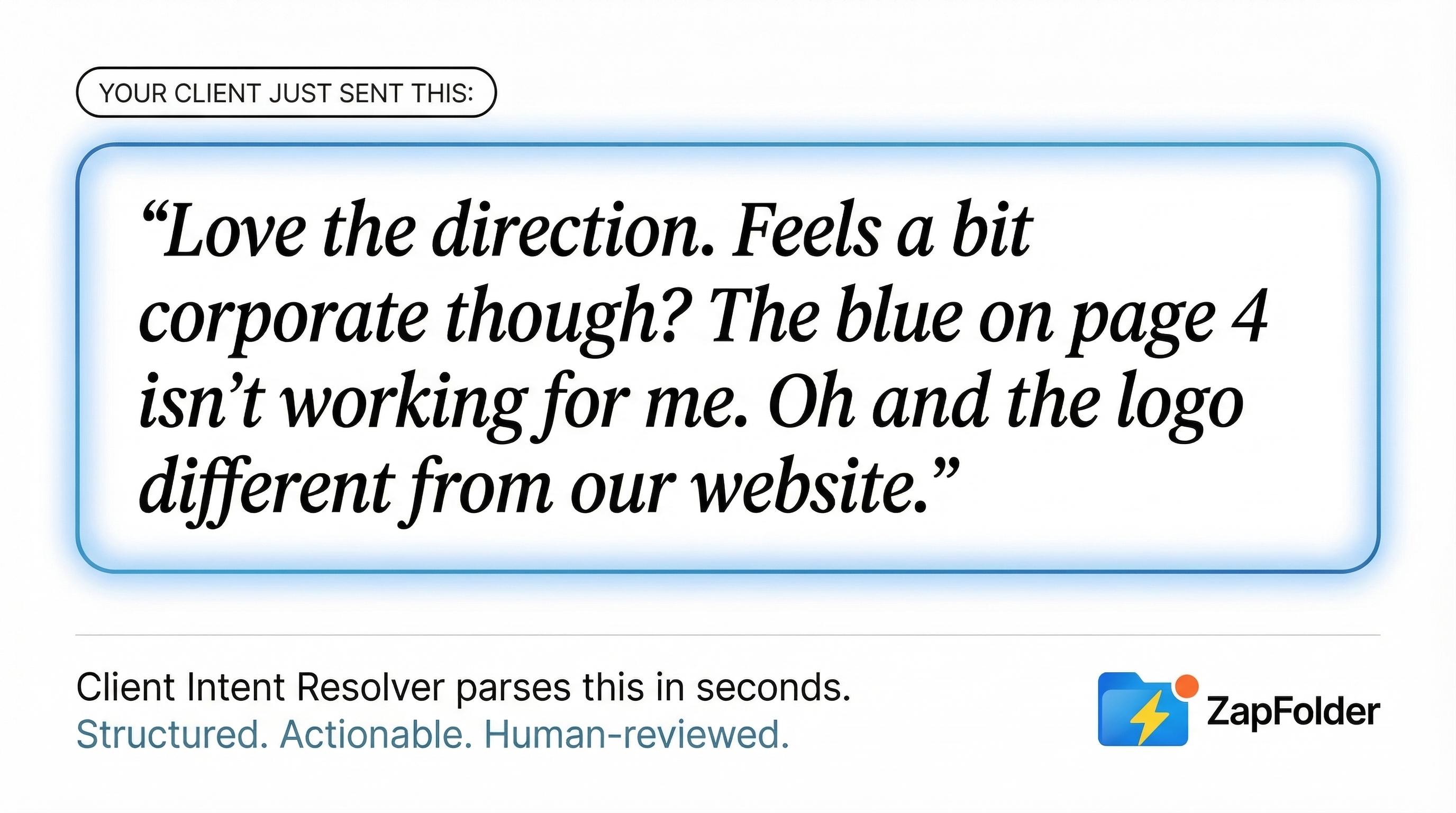
Imagine a client sends this after reviewing a brand deck:
"Love the direction. Feels a bit corporate though? The blue on page 4 isn't working for me. Also I sent some notes to Sarah last week that should be incorporated. Oh and the logo treatment on the back page looks different from our website."
The Client Intent Resolver would surface:
- A tone adjustment request (less corporate feel — flagged for clarification on scope)
- A specific colour change on page 4 (flagged for design)
- A reference to external notes from Sarah (flagged as missing input — action required before revision)
- A logo consistency check against brand guidelines (concrete, actionable)
The agent will also ask clarification questions where needed to create a full picture of all changes needed.
What took a project manager 20 minutes to parse is ready in seconds — and structured in a format the team can actually work from.
Human-in-the-Loop by Design
The Client Intent Resolver never takes action on its own.
All output is presented as suggestions. Your team decides what to act on, what to push back on, and what to send to the client for clarification. The agent doesn't have the final word on any revision — that belongs to the people who understand the project, the relationship, and the context.
This is intentional. Client feedback often involves nuance that requires professional judgment: knowing when a client means something literally versus figuratively, when to push back, when a request would undermine the work. The agent handles the structural work. The human handles the judgment.
Where It Fits in Your Workflow
The Client Intent Resolver is primarily built for Review Mode — the phase where files have been shared with a client and feedback is coming back.
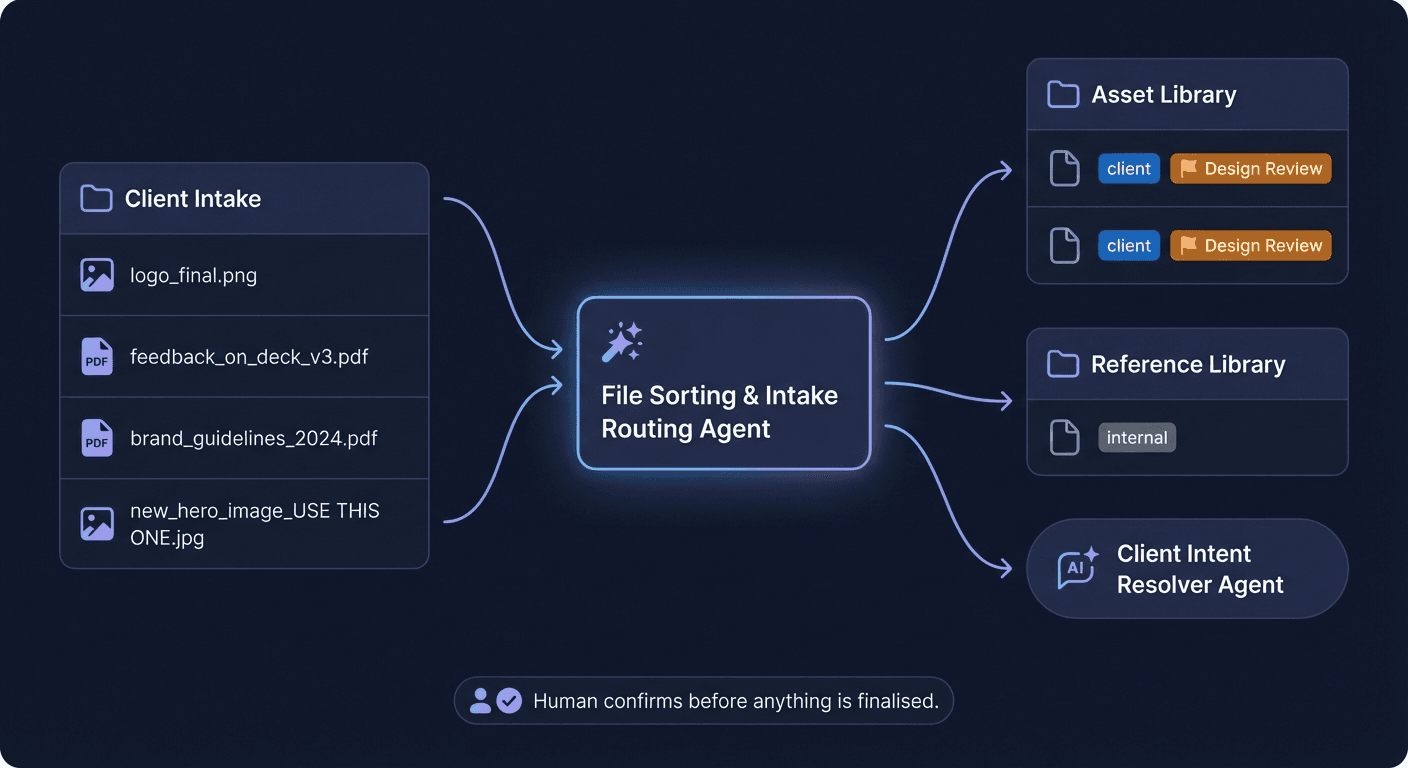
It also supports Intake Mode, where external parties upload files accompanied by notes or instructions that need to be interpreted and routed correctly.
In both cases, the same underlying problem exists: someone has communicated intent in natural, imprecise language, and your team needs to convert that into precise, actionable work. That's the gap the agent closes.
Why This Matters Beyond Efficiency
There's a less obvious benefit to structured feedback handling: it protects client relationships.
When a revision comes back and the client feels like their feedback wasn't heard, the frustration isn't always about the work itself — it's about the process. Something was lost in translation. Something got missed. Trust erodes slightly, and the next round of feedback is more guarded.
When feedback is parsed carefully, confirmed back to the client before work begins, and addressed systematically, that dynamic changes. The client feels heard. The team feels less reactive. Revision rounds get shorter not just because the work is clearer, but because the relationship is steadier.
The Client Intent Resolver doesn't just save time. It makes the feedback loop more honest.
The Bigger Picture
ZapFolder's AI isn't positioned as a general-purpose assistant. Each agent is built to solve one specific, recurring problem in artifact-based workflows.
The Client Intent Resolver owns a single job: turning messy human feedback into structured, actionable input for your team. That's it. But that job, done well, removes one of the most persistent bottlenecks in creative and agency work.
Less time decoding feedback. Fewer revisions wasted on misunderstood requests. More time spent on the work.
The Client Intent Resolver is part of ZapFolder's agentic roadmap, currently in development. If you're interested in early access, get in touch.